

Think of recruitment project management as applying the rigor of a real project to your hiring process. It’s about transforming hiring from a reactive, often chaotic task into a structured, predictable business function. You're defining the scope, setting clear goals, managing timelines and stakeholders, and using data to make smart decisions—all to ensure you land […]

Think of recruitment project management as applying the rigor of a real project to your hiring process. It’s about transforming hiring from a reactive, often chaotic task into a structured, predictable business function. You're defining the scope, setting clear goals, managing timelines and stakeholders, and using data to make smart decisions—all to ensure you land the right person for the job.
Before you even think about writing a job description, the most important work needs to happen. I've seen it time and again: skipping this initial groundwork is the fastest way to get vague job posts, interviewers who are all on different pages, and a frustrating experience for everyone.
The key is to treat every hire like a formal project. This means going way beyond a simple job title and a list of required skills. It starts with a deep-dive discovery session with the hiring manager and other key people to build a crystal-clear picture of what success in this role actually looks like.
The real goal of this first phase is to create a shared vision. You need to ask probing questions that get to the heart of why this role exists in the first place.
Here are the core areas I always explore with hiring managers:
Getting everyone aligned at this stage is absolutely critical. It ensures that every single person who interacts with a candidate—from the first-line recruiter to the final decision-maker—is measuring them against the same meaningful standards. If your team finds it tough to get this level of clarity, bringing in a specialized consultant for hiring can provide the structure you need to define roles with this kind of precision.
Key Takeaway: Think of this well-defined project scope as your single source of truth. It's the document that guides your sourcing, your interview questions, and your final decision, preventing that all-too-common nightmare of requirements changing halfway through the search.
Once you have a deep understanding of the role, you can set clear, measurable goals for the recruitment project itself. This is where you inject some real project management discipline. Vague targets like "find a good candidate quickly" just don't cut it. You need specific targets that create accountability and let you know if you're on track.
The value of this structured approach is being recognized everywhere. The Project Management Institute (PMI) notes that while there are roughly 40 million people in project management roles today, a massive talent gap is looming. By 2035, organizations are expected to need another 25 to 30 million project managers to keep up. You can dig into more of these project management workforce trends to see just how essential these skills are becoming across every part of a business, including HR.
This foundation, built on a detailed project scope and concrete goals, sets the stage for everything else. It gives you the clarity to write a compelling job description, design a smart sourcing strategy, and run a hiring process that consistently brings in great people who are ready to succeed from day one.
With a solid project plan locked in, it’s time to switch gears and start the search. Let's be honest: effective recruitment isn't about posting a job ad and crossing your fingers. It’s about casting a wide, strategic net to build a pipeline of high-quality, diverse candidates.
The best place to start is often right under your own roof. Before you even think about external channels, look at your internal talent pool and fire up your employee referral program. Candidates who come in through referrals tend to be a better cultural fit from day one and stick around longer. It’s a win-win.
Think of your sourcing strategy like an investment portfolio—you need to diversify. A healthy mix of inbound and outbound channels ensures you aren’t putting all your eggs in one basket. Some channels will give you a high volume of applicants to screen, while others will deliver a smaller number of highly targeted prospects.
Here’s a look at the channels that consistently deliver results:
This isn't just best practice; it's a strategic imperative. The global project management talent gap is projected to hit nearly 30 million people by 2035, against a worldwide demand for 65 million professionals. In places like China, that demand is expected to spike by over 100%. Relying on a single channel in a market like this is a surefire way to fall behind.
To help you decide where to focus your energy, here’s a quick breakdown of the most common sourcing channels.
| Sourcing Channel | Speed to Hire | Cost | Typical Candidate Quality | Best For |
|---|---|---|---|---|
| Internal Mobility | Fastest | Lowest | High (Known quantity) | Filling senior roles, leadership development, retaining top talent. |
| Employee Referrals | Fast | Low | Very High | Finding strong cultural fits and filling critical roles across all levels. |
| Specialized Platforms | Fast | Medium-High | High (Often pre-vetted) | Hiring for specific technical skills (e.g., developers, data scientists). |
| Job Boards | Slow | Low-Medium | Mixed | High-volume hiring for junior to mid-level roles with common skill sets. |
| Direct Outreach | Slowest | Medium | High | Targeting passive candidates for niche or very senior positions. |
As you can see, a blended approach that prioritizes high-quality channels like referrals and specialized platforms will almost always yield better, faster results than simply relying on job boards alone.
Once the applications start flowing in, you need a structured, consistent process to evaluate them. A multi-stage vetting funnel is the key to making sure you’re qualifying candidates on the right criteria at each step, which saves everyone—your team and the applicants—a ton of time.
A well-designed funnel typically moves from broad screening to deep, hands-on evaluation:
Pro Tip: Create a simple evaluation scorecard before you conduct a single interview. Base it on the core competencies from your project scope and make sure every interviewer uses it. This is one of the single most effective ways to reduce bias and ensure every candidate gets a fair shake.
Generic, "gotcha" interview questions are a waste of time. The secret to effective vetting is customizing the assessment to the actual demands of the job.
For highly specialized roles, like in finance, you need to know if a candidate can handle the heat. In private equity, for instance, interviews are notoriously grueling. Understanding the depth required for these high-stakes positions is critical, and a resource like a comprehensive Private Equity Interview Guide can show you just how deep that preparation needs to go.
For technical roles, the focus is entirely different. Ditch the abstract brain teasers and use practical assessments that mirror the day-to-day work. A great technical interview doesn’t just find someone who can write code; it identifies a true problem-solver who builds solutions that are scalable and easy to maintain.
This structured, multi-faceted approach transforms your hiring process from a game of chance into a predictable, repeatable project with outcomes you can measure.
Every recruitment project is a living, breathing thing. Without a clear map and consistent communication, it's easy to get lost. The real secret to successful recruitment project management isn't just finding great candidates; it's about mastering the schedule and keeping everyone in the loop.
This isn't about spamming inboxes with daily updates. It's about creating a rhythm for the project, setting clear expectations, and making sure everyone involved—from the hiring manager to the finance team—knows exactly what’s happening and what’s needed from them. A solid timeline provides the backbone, while great communication builds the trust to handle the inevitable curveballs.
This process gives you a bird's-eye view of the key stages, from finding someone to getting them through the final rounds.
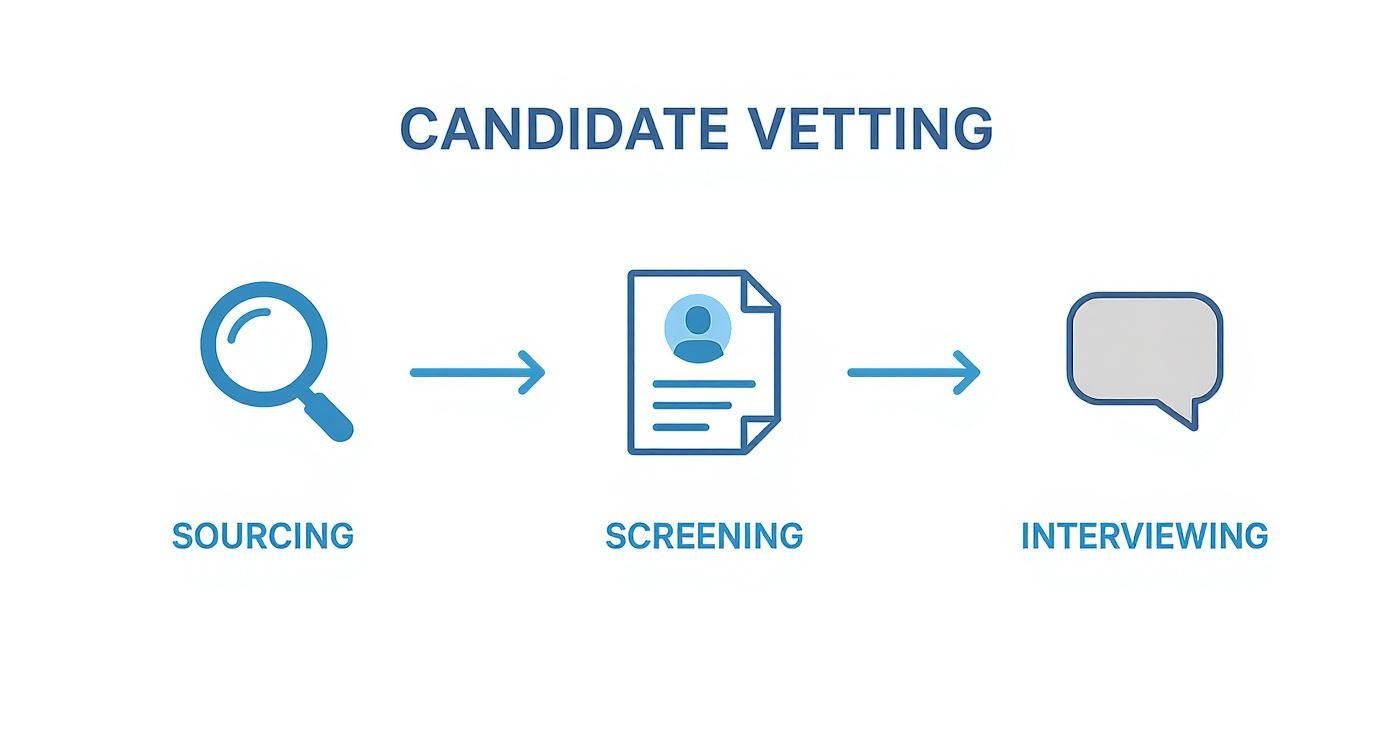
Think of each of these steps as a critical checkpoint in your project plan. Each one requires coordination, timely feedback, and clear handoffs to keep the momentum going.
We’ve all seen them: beautiful, color-coded project plans that fall apart the second they meet reality. The most common pitfall is optimism. To build a timeline that actually works, start with your ideal hire date and work backward, adding generous buffers at every stage.
Instead of just blocking out "one week for interviews," be honest. Factor in that your lead engineer is on vacation, or that the hiring manager has back-to-back meetings. A realistic timeline should have tangible milestones, not just vague phases.
To keep everything organized and visible, you might want to look into some of the best planning apps out there. A shared visual timeline can do wonders for keeping everyone on the same page.
Your stakeholders are your allies, not just names on an interview loop. The trick is to give the right information to the right people, without creating more noise. A hiring manager needs the nitty-gritty on candidate feedback, but an executive sponsor probably just wants a quick, high-level summary once a week.
Set a clear communication cadence right from the start. Maybe it's a standing 15-minute sync every Tuesday morning. Or perhaps it's a shared dashboard showing the candidate pipeline in real time. The goal is to make the status obvious and accessible, cutting down on the endless "any updates?" emails and letting everyone focus on making decisions.
Pro Tip: The Feedback Loop is Everything. The single biggest timeline killer I've ever seen is a slow feedback loop. Make it painfully easy for interviewers to share their thoughts. Use a simple, standardized scorecard and set a firm rule: feedback is due within 24 hours of any interview. This isn't just about process; it's about respecting the candidate's time and keeping your top choices from accepting another offer while you wait.
A good project manager is always a little bit paranoid. You have to constantly ask, "What could go wrong here?" In recruiting, the potential roadblocks are everywhere. Spotting them early means you can have a Plan B ready before a small hiccup derails the entire search.
Here are a few common risks I always plan for:
By treating your timeline and stakeholders with the same discipline you apply to sourcing, you shift the entire hiring process. It stops being a frantic, reactive scramble and becomes a controlled, predictable engine for bringing amazing talent into your organization.
You can’t improve what you don’t measure. It’s an old saying, but it’s the absolute bedrock of solid recruitment project management. When you stop relying on gut feelings and start tracking the right Key Performance Indicators (KPIs), you transform hiring from a reactive scramble into a strategic, data-driven operation.
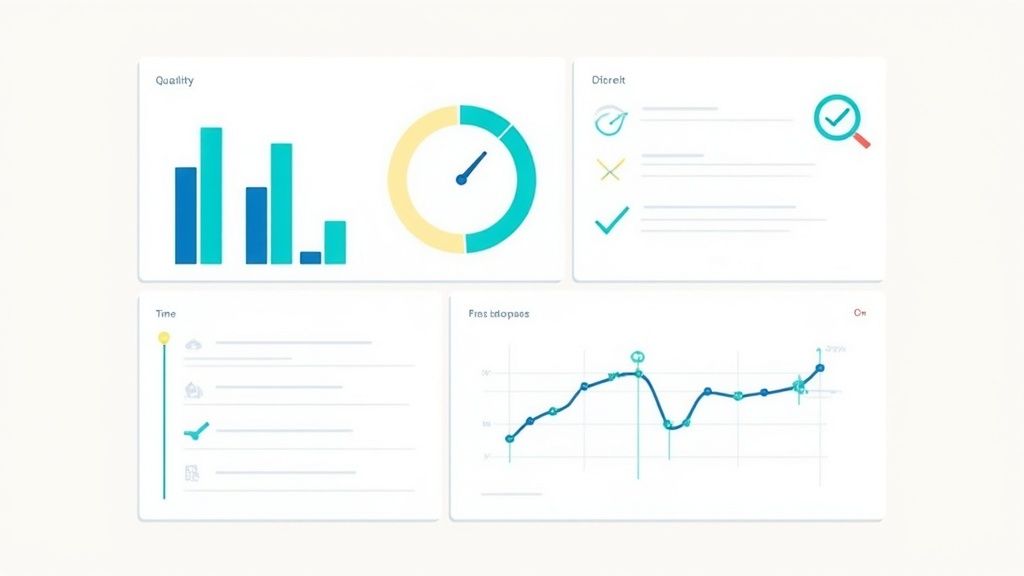
It’s easy to fall into the trap of only tracking Time to Fill. Sure, it’s an important metric, but on its own, it tells you nothing about the quality of the person you hired or how messy your process was. A truly effective KPI dashboard gives you the full story—a complete, panoramic view of your project’s health.
To get the real picture, you need a balanced scorecard. Think in terms of speed, cost, quality, and the efficiency of your process. These metrics don't live in a vacuum; they work together to reveal where you’re winning and, more importantly, where you're hitting snags.
Real-World Insight: I once ran a project where our Offer Acceptance Rate for senior engineers suddenly nose-dived to 60%. The data forced us to look inward. We discovered our internal approval process was taking over a week, and we were losing incredible candidates to faster competitors. By streamlining our approvals and cutting that time to just 48 hours, our acceptance rate shot back up to 90%.
The right data tells a story and points you directly to the problem.
You don’t need an expensive, complicated business intelligence tool to get started. A well-organized spreadsheet or a simple dashboard in your project management software can make a huge difference. The goal is visibility—for you and for your stakeholders.
When you can see the data clearly, bottlenecks jump out at you. Is your candidate drop-off rate spiking right after the technical interview? That's a massive red flag telling you to investigate that specific stage immediately.
To get started, here’s a breakdown of the KPIs that should form the core of any recruitment project dashboard. These metrics provide a comprehensive view of your hiring engine's performance.
| KPI | Definition | Formula / How to Measure | Why It Matters |
|---|---|---|---|
| Quality of Hire | Measures the value a new employee brings to the company. | (New Hire Performance Score + First-Year Retention Rate + Hiring Manager Satisfaction Score) / 3 | This is the ultimate measure of success. A fast, cheap hire who underperforms is a net loss. |
| Cost per Hire | The total internal and external cost to fill a position. | (Total Recruitment Costs) / (Total Number of Hires) | Helps you optimize your spending and justify your budget. It reveals the true investment behind each hire. |
| Time to Fill | The number of calendar days from when a job requisition is approved to when an offer is accepted. | Date of Offer Acceptance – Date of Job Requisition Approval | A key indicator of efficiency. A long Time to Fill can lead to lost productivity and lost candidates. |
| Offer Acceptance Rate | The percentage of candidates who accept a formal job offer. | (Number of Offers Accepted) / (Number of Offers Extended) x 100 | A rate below 85% often signals issues with compensation, culture, or the candidate experience. |
| Sourcing Channel Effectiveness | Tracks which sourcing channels produce the highest quality candidates and hires. | Track the number of qualified candidates and successful hires from each channel (e.g., referrals, job boards). | Allows you to double down on what works and stop wasting money and time on channels that don't deliver. |
Tracking these KPIs isn't just about looking in the rearview mirror; it's about predicting what's ahead and making proactive adjustments to steer the project toward success.
This shift toward data is happening everywhere. In fact, it’s becoming the industry standard, with median salaries for recruitment project managers in the U.S. expected to hit around $136,000 by 2025. The demand for project managers who are skilled in AI and big data is even projected to jump by 87% by 2030, which tells you everything you need to know about where this field is headed.
Especially when you’re hiring for technical roles, understanding specific metrics is even more critical. To see how these principles apply in that context, check out our guide on establishing the right KPIs for software development. This strategic approach is what turns recruiting from a cost center into a powerful business driver.
Getting a candidate to say "yes" to your offer feels like crossing the finish line, but in reality, it's just the starting pistol for the most important part of your recruitment project. The final stretch—from a smooth onboarding to long-term retention—is what really determines whether all your effort pays off. If you fumble the handoff now, you risk seeing your star candidate walk out the door in a few months, forcing you to kick off the whole process again.
First things first: let's talk about payroll and compliance. It might sound like boring paperwork, but this is your new hire's very first taste of how your company actually operates. A clean, organized process that gets them set up in the HR system and guarantees their first paycheck is correct and on time builds instant trust.
Think about the alternative. A messy start filled with wrong forms, missed deadlines, or delayed system access screams disorganization. That's a terrible first impression, and one that's incredibly hard to undo.
Once the admin is handled, the real work of onboarding begins. A great program is so much more than just pointing someone to their desk and handing over a laptop. It's a carefully planned journey designed to weave a new person into the company's technical workflows, social circles, and unique culture.
The data doesn't lie: companies with a strong onboarding process boost new hire retention by a staggering 82%. This isn't just a "nice-to-have" perk; it's a core business strategy that directly protects your investment.
Without a solid plan, new hires are left to fend for themselves. They feel isolated, overwhelmed, and spend their first few weeks just trying to figure out what’s expected of them. That constant uncertainty is exactly what pushes people to start looking for another job.
To give your onboarding some much-needed structure, you need a 30-60-90 day plan. Treat it like a mini-project plan for the new hire's first three months, complete with clear goals, milestones, and regular check-ins.
This simple framework turns the daunting task of starting a new job into a series of manageable sprints.
First 30 Days (Learning and Listening): The goal here is pure absorption. The new hire should be learning the company's history, who's who on the team, how to use key tools, and getting through initial training. Success means they know the lay of the land and have met their core collaborators.
Next 30 Days (Contributing and Connecting): Now, they should start taking the reins on smaller tasks and contributing to team projects. This is when they begin to apply their skills and build working relationships outside of their immediate circle.
Final 30 Days (Owning and Innovating): By this point, your new hire should be working with more autonomy. They should feel comfortable identifying challenges, proposing solutions, and managing their own work with less supervision. They are officially becoming an integrated part of the team.
This structured timeline provides a clear path forward, giving new team members a sense of progress and accomplishment right out of the gate.
A great onboarding program is the final, critical deliverable of your recruitment project. It ensures the candidate you worked so hard to find doesn't just join your team, but actually thrives for the long haul.
At the end of the day, effective recruitment project management doesn't stop when the offer letter is signed. By designing a thoughtful onboarding experience and giving your new hire a clear roadmap for success, you’re not just filling a role—you’re turning a promising candidate into a high-performing, long-term asset.
Applying project management principles to hiring is a game-changer, but it’s not always a smooth transition. When you’re under pressure to fill a critical role, real-world problems pop up that can throw even the best-laid plans off track. Let's dig into some of the most common snags you’ll hit and talk about how to handle them.
These are the questions I hear most often from teams trying to get their hiring process under control. Here are some straight-shooting answers to help you stay on course.
This is, without a doubt, the number one bottleneck in almost any hiring process. The secret isn't to chase them harder; it's to be proactive from the very beginning.
During your kickoff meeting, you need to set crystal-clear expectations for communication. Agree on a specific turnaround time for feedback—say, 48 hours after an interview. This isn't about nagging; it's about framing your follow-ups in the context of the project's success.
Instead of sending a vague "Any thoughts on those candidates?" email, tie your request to a specific project milestone. Try something like, "To keep us on track to make offers next week, I need your feedback on these three candidates by EOD Thursday." This simple shift connects their action (or inaction) directly to a tangible outcome they care about.
If the delays persist, bring data to the conversation. A simple visual can be incredibly effective at showing, not just telling, them about the impact.
When a manager sees they are the reason top talent is walking out the door, you'll often see a rapid change in their behavior. Using a shared tracking system like a simple Kanban board also helps by creating passive transparency. Everyone can see where things stand without you having to be the one constantly sending reminders.
When you’re not seeing the results you want, the natural reaction is to panic and start sourcing like crazy. Before you burn yourself out, take a breath and look at your data. You need to figure out where the process is actually broken.
The most effective solution is to diagnose before you prescribe. A low application volume requires a completely different fix than a high candidate drop-off rate after the technical interview.
First, check your pipeline metrics. If you have a trickle of applicants, the problem is at the top of your funnel. It's time to revisit the job description. Is it compelling? Does it accurately reflect the role, or is it just a laundry list of impossible demands? And just as important, are you posting it in the places where this kind of talent actually hangs out online?
On the other hand, if you've got plenty of candidates coming in but they're all dropping out after a certain interview, the issue is somewhere in your process. This is when you need to gather feedback, especially from candidates who withdrew. Was there a surprise about the salary range? A disconnect on the team's culture? Often, a quick sync with the hiring manager to separate the absolute "must-haves" from the "nice-to-haves" can instantly broaden your pool of qualified candidates.
Don't overcomplicate it. For most hiring projects, you don't need a massive, expensive system. Honestly, a simple Kanban board is one of the most powerful tools out there for managing the entire workflow from start to finish. Tools like Trello, Asana, or Monday.com are perfect for this.
The concept is simple: create columns for each stage of your hiring process. Every candidate gets their own card, and you just drag that card from left to right as they move forward.
A standard board might look something like this:
This visual layout gives you an immediate, at-a-glance snapshot of your entire pipeline. It makes it dead simple to spot bottlenecks. If you see ten cards stacked up in the "Technical Assessment" column, you know exactly where your problem is. This kind of transparency keeps stakeholders in the loop without you having to run constant status meetings, freeing everyone up to focus on what really matters: finding the right person for the job.
Careers in cryptography are high-stakes, high-reward. These are the people who build and break the digital codes that secure our world, protecting everything from your bank account to global decentralized networks. It's a field with massive growth and serious six-figure salary potential. Why Cryptography Careers Are Exploding Welcome to the new frontier of digital trust. […]

The demand for remote machine learning jobs isn't just a trend anymore; it's a fundamental shift in how AI talent is hired and deployed. For ML professionals, this opens up a world of possibilities, not just in terms of flexibility, but also significant financial upside. Companies are in a fierce competition for top talent, and […]

The software engineering field is constantly shifting, with certain specializations commanding unprecedented salaries. But which roles truly offer the highest earning potential, and what does it take to secure one? This data-driven guide breaks down the best paying software engineering jobs, moving beyond vague titles to offer a detailed roadmap for career advancement and strategic […]


