Bootstrapping Vs. VC Funding – How to Finance Your Startup in 2023

Nel
Posted on 29 August 2022



In the first 6 months of 2023 alone, VC firms in the US have raised over $121.5 billion in funds. While this may seem like an attractive figure that would encourage more and more founders to choose the VC funding route for their startups, experts say that the majority of startups, close to 80% utilize bootstrapped resources to fund their businesses. So how do entrepreneurs decide between bootstrapping and VC funding?
Table of Contents
Before we analyze why some founders would choose to bootstrap while others aim to raise VC funding, let us take a brief look at why businesses need sources of financing and what characteristics of your business will determine the type of financing you go for.
This might be too obvious a question to ask but it’s still worth discussing.
There are certain factors to consider when deciding to take the bootstrapping or the VC funding route for your startup.
Here’s a look at how some of the biggest companies we know of today started off:
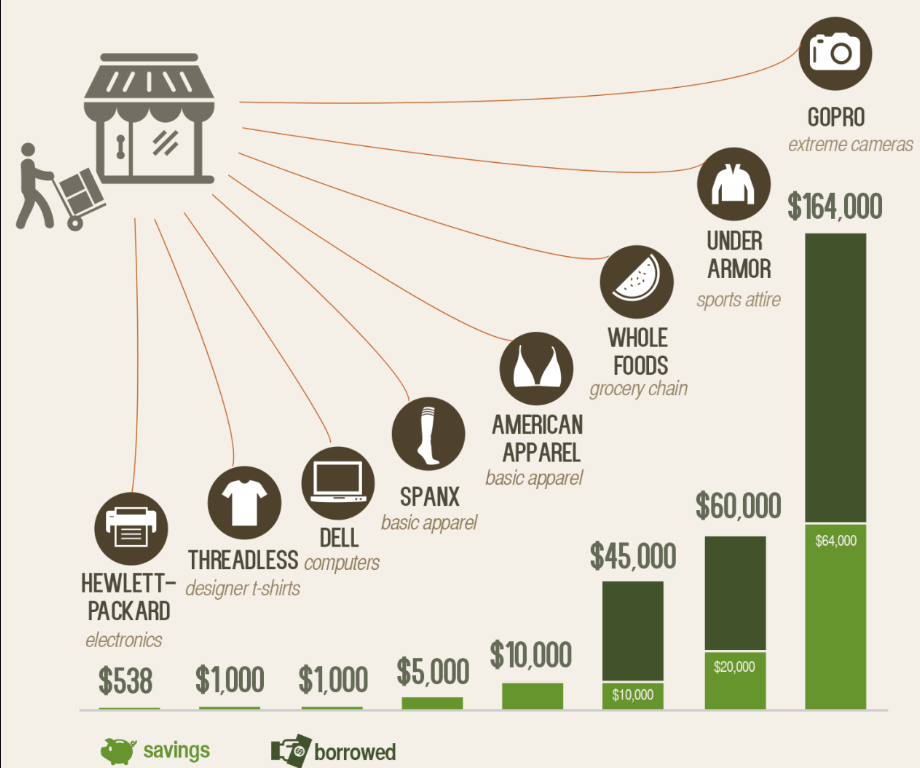
Bootstrapping a company is using your own revenue to grow your business rather than bringing on outside investors. Many large-scale businesses you know of today started off as bootstrapped entities.
It can be pretty appealing to think of building your startup on your own terms with your own money. It is definitely the most sought-after method of building amongst hustlers that are willing to put in the work at all costs. If you manage to pull it off and actually make your bootstrapped business profitable, it can be one of the most rewarding experiences.
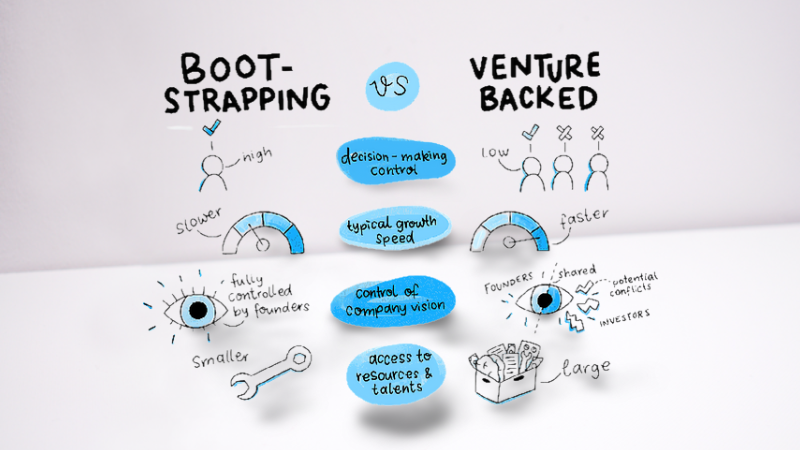
Bootstrapping a startup allows you to keep it lean and keep from depending on outside capital. This means your entire growth would be fuelled by internal cash flow generated from the business itself and allows you to have complete control of decisions and how you spend your resources.
In order to ensure bootstrapping is the way to go for your business you may want to look at the following criterion:
If you do not want to give up any control and any equity to any other source and if you want to be able to run your own company for its entire existence and decide if and when you want to sell it then bootstrapping may be a good avenue for you. You won’t have anyone looking over your shoulder, asking you questions, or giving advice as is what’s expected if you head the investor route.
Bootstrapping is ideally suited for founders that aim to keep their business and unit economics small. And they generally plan for a slow rate of growth and as there are minimal resources to hire more team members which in turn makes the team a lot more manageable. In most cases, bootstrappers prefer to dominate a niche market than to try and capture a large market share.
Most founders do not want to lose their ability to call the shots within their own organization. When external funding comes through investors, it can be very tricky to maintain full authority over the decision-making processes that affect the direction of your business. This is because if you’re to have investors they would have significant influence over the direction of your company. And as they have a stake in your company, you would need to protect their interests in return.
Entrepreneurs have a sense of pride in building their own products with no outside resources as it is not an easy feat to achieve. As a result, if you were to bootstrap your business and build it into a profitable organization with nothing but your own means, you’re bound to experience a huge sense of accomplishment.
Bootstrapping involves no outside debt or investors, but sometimes you have to pull the profits out of the business or have to sell the business to achieve liquidity in the business, and that cash would go back to the founders and initial investors.
If the financial goal for your business does not exceed a few hundred thousand dollars, then bootstrapping is your way to go, as it is very unlikely that VCs would be interested in such small economies of scale.
But make note that bootstrapping would mean you would have to face the following:
Overall as bootstrappers, you need to focus on increasing your skill sets if you intend on keeping your head above water.
Bootstrapping is not for everyone, especially if you are in an industry that requires research and development, if you’re in pharmaceuticals or medical research, for instance, then bootstrapping is not going to cut it for you
But keep in mind raising VC funding isn’t for everyone either. Not everyone can raise VC funding in the first place.
VC funding is a form of private equity. This type of financing allows investors to seek out businesses, entrepreneurs, and startups that they believe have exponential great potential and invest capital in them. This capital may come in the form of finances or even technical and managerial expertise.
While these investors take huge risks and gamble and switch their investment decisions, they also are aware that some of these companies have the potential to become the next biggest unicorn. Thus they make a gamble based on their expertise and knowledge after taking into consideration future trends.
Raising funding can make things easier. It can make it a little more complicated, but having that bit of extra cash can help out when you have big goals and dreams to achieve.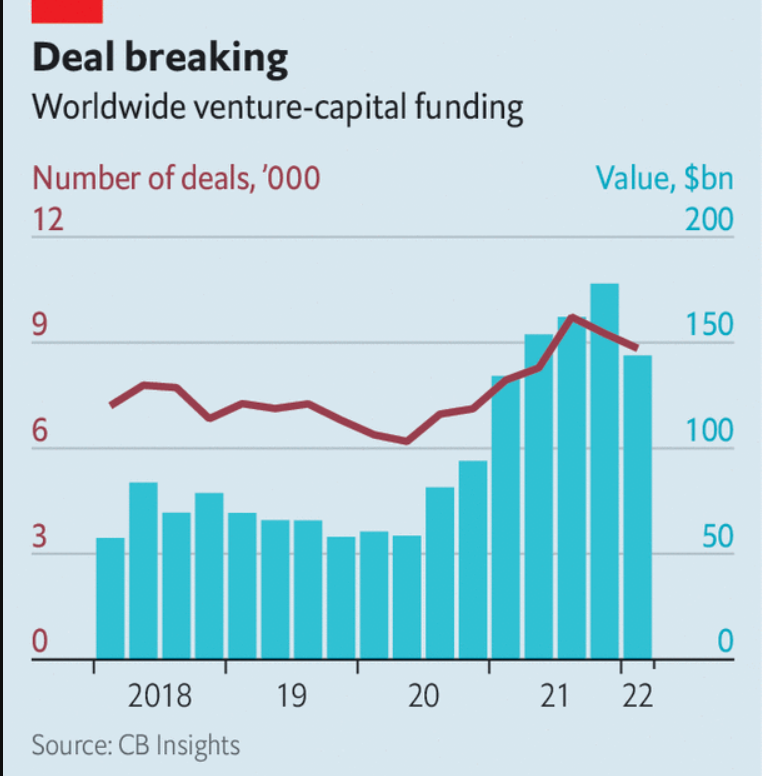
If you plan to raise VC funding for your business, then the following are some of the possible conditions you have set for yourself:
If you require huge amounts of capital to even build your business, then VC may be the best route for you to take. Investors can bring in major financial resources that you cannot attain as a bootstrapper. Investors come with connections that help you get in the door which makes it easier to hire the right people as you would have an investor name in tow.
VCs only invest after they’ve witnessed a great product market fit and are sure they have a cash-making machine on their hands.
Venture looks for a high level of growth, which exists in the very early stages of a company.
When you raise a venture, you hire fast, they want you to burn money and raise new funding every 18 months at a higher valuation.
Don’t forget, if you are VC-backed, you would have a board of directors that would need to provide a green light for all your decisions, and relentless board meetings to attend to.
But on the plus side when your company is VC funded, you’re armed with a sense of resilience and security that comes with it. If your company manages to grow exponentially, the VC will invest endless amounts of money to help you do that.
Investors give advice, they provide value that is beyond the monetary value they bring to the company.
As a VC-backed company, you can hire more support, and can move faster, but it can also get a bit more complex, and the funds that come your way come with a lot of expectations.
Most often this decision is not in black or white. While most startups would begin as self-funded entities while they find their product market fit, they would utilize the revenue gathered from their early adopters to experiment and fine-tune their solutions until they’ve captured a larger segment of their audience.
So you have the right team, your business is making revenue and you have built a solid customer base.
But now you feel it’s time to take it a step further. Maybe your goals have changed since the time you started. Maybe you brought in a new partner that’s got a bigger vision for your company and you too are beginning to see it. But you also know that there’s no way you can achieve that vision with your small bootstrapped budgets.
Now is the time you’d start thinking of external funding.
One thing to keep in mind is that it’s not about the solid business plan you got going for your project, nor is it about who you know, or what experience you have in the field. Most VCs won’t care about any of that.
What VCs care about is what you have built, your team, your product, and your customer base.
Do not waste time on networking until you have the MVP & do not waste time on the meetings until you have a product to sell until you have some credibility!
Landing venture capital funding is one of the biggest competitions you would face. Growth at all costs is what VCs are looking for, so if that is something you can prove then you’ve got a good chance of landing one.
While in bootstrapped companies founders retain their majority stake, when you work with venture investors, companies end up going through multiple funding rounds, and this is what’s understood as dilution.
Usually, VC-backed companies face around 6 or more rounds of funding with each one buying about 20% of the company which eventually leaves the founders with about 15% stake in their own companies. Dilution is typically resisted by shareholders as it would lead to the devaluation of their existing equity.
VCs raise funds from wealthy individuals and firms and invest in startups. But they only care about outlier success. Their entire aim is to invest in high-risk, high-growth companies. Those that go big or go home.
Also, note that VCs not only add funding and value but also provide advice. But their main incentive is to get a return on their investment.
Venture capital may be the route for 1% of businesses while bootstrapping will be for 99% of others.
Management fee
Some VC firms charge a management fee as they offer more than just funding. Their technical and managerial expertise that’s imparted comes at a price.
Carried interest
While other VC firms charge an interest that is carried forward. This is a percentage of the profits that end up going to your fund manager.
Indie funding – angels that don’t have the same level of expectations as ventures, they go for smaller rounds of funding. They have simpler structures, and fewer rules and you do not have to give up control of your business.
Non-dilutive funding – this type of investment includes loans, grants, crowdfunding, vouchers, tax credits, licensing, etc. that enable you to fund your startup without relinquishing ownership of your company to external parties. Some platforms like Pipe and iFundWomen offer excellent alternatives for VC funding.
Unlike venture capitalists that are solely interested in the big bucks, Angel investors take into consideration smaller exits as long as the companies don’t require several rounds of funding. It is often the bootstrapped companies that and in need of small rounds of funding that sought out angel investors in order to help them achieve targets that would be otherwise impossible with their internal finances.
Read More:
Guide to the Top Venture Capital Firms in Boston
Guide to the Top Venture Capital Firms in Miami
Guide to the Top Venture Capital Firms in New Zealand
Guide to the Top Venture Capital Firms in Canda
Guide to the Top Venture Capital Firms in Australia

SAP Ariba Network revolutionizes procurement by enabling organizations to collaborate seamlessly with suppliers. This article explores how SAP Ariba Network facilitates efficient procurement processes, enhances supplier relationships, and drives overall procurement excellence. Understanding SAP Ariba Network SAP Ariba Network is a comprehensive cloud-based procurement solution that connects businesses with suppliers in a digital marketplace. It...

Evaluating Gun.io’s pricing, timeline, vetting rigor, customer feedback, and pros and cons. We compares it with top Gun.io alternatives: CloudDevs, LatHire, Gigster, Toptal, Arc.dev, Upwork, and We Work Remotely, and conclude with guidance on selecting the best fit for your development needs.

Turing is a freelance talent platform that offers sourced and vetted remote developers and software engineers for hire. In this article, we will compare the top Turing alternatives for remote developers in 2026. 1. What is Turing? Turing is recognized as a talent provider that coordinates with US-based companies seeking remote freelancers in the tech...